
Why U.S. Critical Infrastructure Needs Advanced Drone Detection Radar
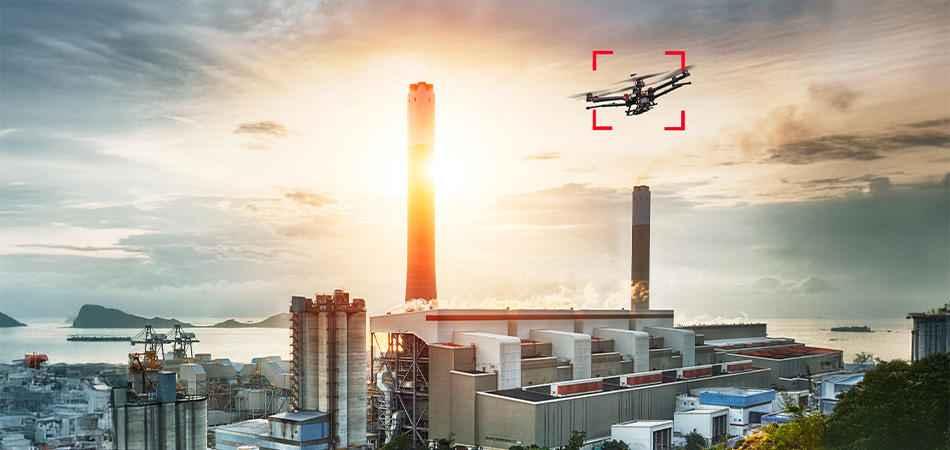
From power grids and data centers to water treatment plants and stadiums, America’s most vital systems are increasingly vulnerable to airborne threats. The growing accessibility of drones—many of them small, fast, and signal-silent, or “dark”—has exposed critical infrastructure to a new class of risks that legacy security tools were never designed to address.
In this environment, radar is no longer optional. It’s essential to safeguard the systems that keep our nation running.
Drones are Testing the Limits of Physical Security
Most security teams already operate with limited visibility. Cameras have blind spots. Fences don’t cover the air. And RF sensors rely on signal detection—meaning “dark drones” that operate without active transmission can slip by unnoticed.
That’s a problem when the drone in question is surveying your perimeter, dropping contraband, or, perhaps worst of all, delivering a kinetic payload.
According to the Department of Homeland Security, UAS (unmanned aerial systems) have already been detected near power stations, water facilities, and transportation infrastructure. With most legal mitigations still reserved for federal agencies, the private and public organizations that run these sites are left in a gray zone, unable to neutralize drones in real time, but entirely responsible for managing the risk.
With limited legal mitigation permissions, early detection provides the best defense, offering time for soft-mitigation maneuvers including power down or power diversion, evacuation, and engaging local law enforcement for emergency support.
Drone Detection Radar Fills the Gaps That Other Sensors Leave Behind
Advanced radar systems provide a critical sensing layer in any modern drone detection strategy—especially in complex, outdoor, or high-interference environments where other sensors struggle.
Unlike optical cameras, radar can detect drones even when visual contrast is poor. (Think: a white drone against a cloudy sky.) In these instances, cameras typically struggle to recognize or track the object. And unlike RF sensors, radar doesn’t depend on drones emitting a detectable signal. While radar does require a clear transmission path—it can’t see through buildings or other structures, for example—it excels in challenging visibility conditions like fog, low light, or visual clutter, which makes it one of the few technologies capable of detecting and tracking all drone types.
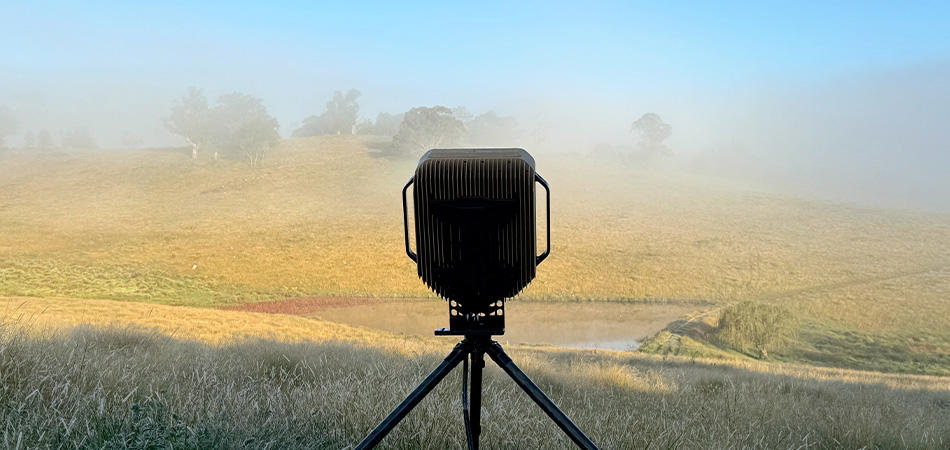
But not all radar systems are created equal. To secure critical infrastructure sites, the security layer should include radar that is:
- Highly accurate – able to distinguish drones from birds or debris, reducing false positives
- High data processing rate – for internal, real-time tracking and classification, and slewing cameras so they can retain target lock for “eyes on” confirmation
- Low SWaP for flexible deployment – compact form and minimal power requirements, supporting ease of use in scenarios where space and resources are limited
- Ease of integration – easily integrated into existing security infrastructure
- Built for 24/7, all-weather performance – maintaining visibility in low light, fog, rain, or dust, where other sensors may fail
Echodyne’s radar systems meet and exceed those standards. Thanks to MESA technology, Echodyne's solid-state, software-driven, beamforming detection, tracking and classification capabilities enhance security system performance with accurate and real-time objects data. In short: Echodyne radars deliver unmatched fidelity in real time, giving operators the time and clarity to respond with confidence.
Real-World Applications
The need for drone detection radar spans nearly every vertical of U.S. infrastructure:
- Corrections – Prisons and jails have been a primary target for criminals delivering contraband by drone.
- Energy – Substations, power plants, and grid assets are frequent targets of attempts to sabotage
- Transportation – Ports, rail yards, and highways face growing risks from overhead observation and disruption
- Water & Utilities – Treatment plants and control systems are at risk from both physical breaches and drone-enabled cyber intrusions
- Telecom & Data – Cell towers and server farms are vulnerable to signal interference or targeted attacks
Across all these environments, radar delivers a decisive edge: early detection, accurate data, and the time required to make informed decisions. For critical infrastructure-specific capabilities, learn more here: Echodyne Critical Infrastructure Drone Detection Radar.
Precision Radar Gives You Time and Options
Most infrastructure operators don’t have drone mitigation authority. But what they do have is the responsibility to act fast when a threat is detected.
That’s where radar precision becomes more than just a technical spec. The higher the fidelity of your radar data, the faster your cameras can lock onto the object, your command center can assess intent, and your team can initiate the appropriate response, whether that means alerting local law enforcement, initiating lockdown protocols, or escalating to federal partners.
Regulations are evolving and are expected to allow select infrastructure entities to take more direct action. Even then, the ability to act safely will depend on how precisely you can detect, track and classify airborne objects.
Only advanced radar delivers the data quality needed to support safe, informed mitigation decisions, without risk to personnel, systems, or the public.
As drone capabilities grow in sophistication and availability, the threat environment around U.S. critical infrastructure is evolving at a rapid pace. In this shifting landscape, traditional security measures are no longer enough. High-performance radar offers a strategic advantage—enhancing situational awareness, enabling faster responses, and supporting future mitigation when permissions align.
If you're responsible for safeguarding a data center, power plant, or national utility, now is the moment to ask: do you have the visibility you need to detect emerging threats—before they become incidents?